

A better concert feeling in your living room does not necessarily start with more volume. If you want to create a concert feeling in your living room, also look at the space and location of your speakers. Hard floors, bare walls and large windows reflect sound, while soft materials can soften the reflections.
You notice the difference when music sounds clear and pleasant: details come out better and listening feels relaxed. Your furnishings also play a role. A rug, curtains and pillows add soft surfaces. The location of your speakers and the layout of the seating area also determine how you experience music.
In this article you will discover how you can improve the acoustics in your living room step by step. We look at which soft materials make a difference, how to furnish the space attractively and when personal interior and audio advice can help. This way you bring together technology and living comfort, for a listening place that suits your home and the music you like to enjoy.
Key points
- Use curtains, a rug and cushions to soften hard surfaces and make the listening room sound more pleasant.
- Combine soft materials such as plaids and texture-rich fabrics for more comfort and a warmer atmosphere. atmosphere.
- Match the furnishings to the room and your listening position; small adjustments can change the music experience.
- Discover how the placement of your speakers and the choice between stereo, surround and Dolby Atmos affect concert recordings.
- See which type of speaker suits your living room: bookshelf, floor standing, active or built-in speakers.
Improving acoustics with curtains, rugs and cushions
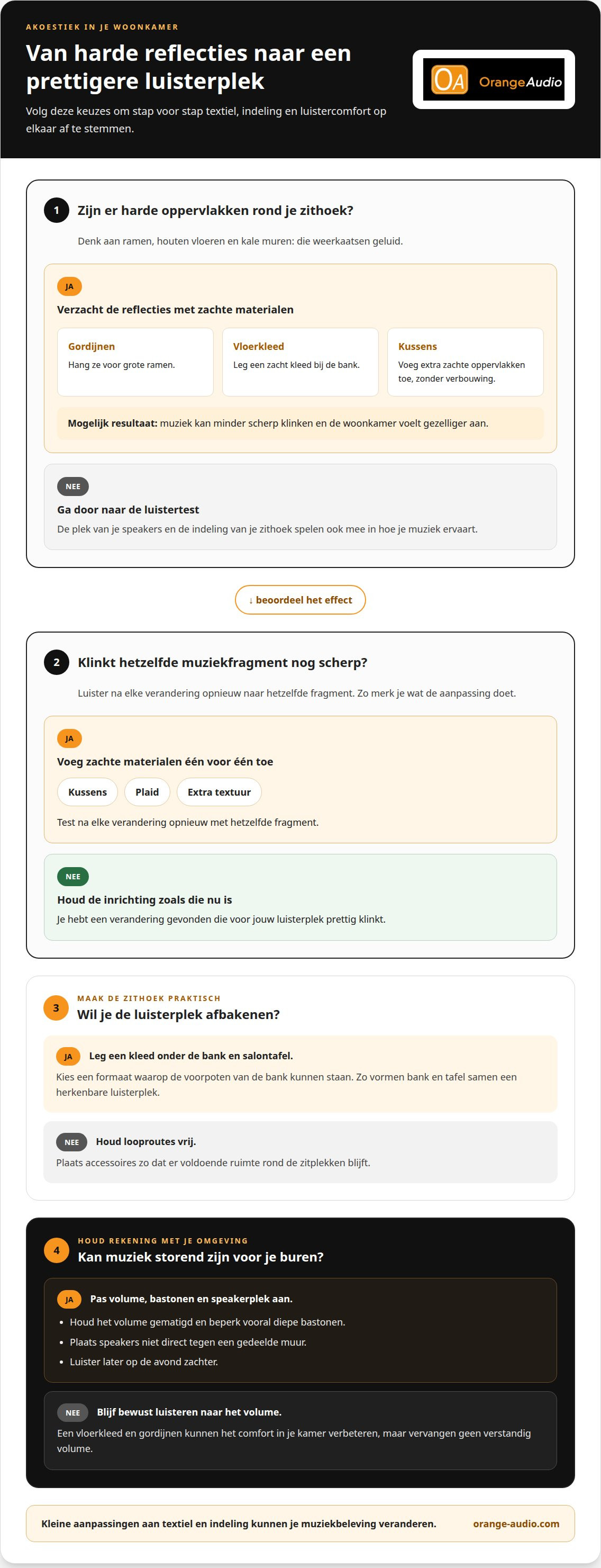
Start with the hard surfaces around your seating area. Windows, wooden floors and bare walls reflect sound. Curtains, a rug and pillows can soften those reflections. Hang curtains on large windows and place a soft rug near the sofa; For high-quality window decoration that both creates atmosphere and helps with acoustics, you can look at Tremdecor. This way, music can sound less sharp and the living room feels more cozy. Cushions add extra soft surfaces without the need for remodeling.
A home theater or music system doesn't have a fixed price: the cost depends on the speakers, amplification and any subwoofer you choose. First decide whether you mainly listen to music or also watch movies. This way you tailor your choices to the room and its use. For a home concert, you can put on concert films or a live album. Choose a recording whose performance and sound mix suit your taste.
How do you improve the acoustics of a living room without major renovation? Add textiles step by step. Start with curtains and a rug and supplement with cushions or a plaid. Listen to the same piece of music after each change to assess what makes the difference. A large rug under the sofa can also define the seating area and visually connect the furniture.
Use a rug to mark areas. For example, place one rug under the sofa and coffee table, so that together they form a recognizable listening place. Keep walking routes clear and choose a size on which the front legs of the sofa can stand. Wall lamps next to a bookcase or floor lamps next to an armchair provide accents without cluttering the seating area.
How do you prevent noise pollution for neighbors when you listen to loud music? Keep the volume moderate, limit deep bass tones and do not place speakers directly against a shared wall. A rug and curtains can improve the comfort of your room, but they don't replace sensible volume. Listen softer later in the evening, when noise in neighboring homes can be more disturbing.
How do you stream concerts in high sound quality via Dutch services? Choose the highest available audio quality in your music service app and connect your playback device stably to your network. Also check whether the recording itself is available in high quality. Combine that listening experience with dimmed lighting: a table lamp by the sofa and a floor lamp next to the armchair together create a cozy atmosphere. In this way, textiles, light and a well-thought-out layout bring comfort and music closer together.
2. Soft materials such as rugs, plaids and cushions
Choose fabrics that feel pleasant and suit the use of your living room. A woolen plaid over the couch provides warmth during a quiet listening evening. Cotton cushions feel airy and are easy to combine with other colors. A deep pile rug softens the floor under your feet. Together, these materials add comfort and texture, without having to change the entire decor.
Variety makes a difference. For example, combine a coarse knitted plaid with smooth cushion covers and a rug with a subtle pattern. This gives the seating area depth without everything feeling the same. Repeat a color in different materials: sand color in the rug, a cushion and a plaid brings peace. If you want more contrast, add a terracotta-colored cushion next to beige or gray furniture.
Also pay attention to the shape and comfort of your furniture. A sofa with deep seats invites you to listen longer; a soft armchair makes a special reading or listening place. Place a footrest within reach and choose a plaid that you can easily reach. This way you can tailor the seating area to moments at home, from attentive listening to relaxing with family.
Natural materials give the room a different look. Wood, wool, cotton and wicker bring structure and warm tones to the interior. For example, combine a wooden coffee table with a wool plaid and linen cushions. Keep colors and materials in balance: repeat some shades and alternate smooth surfaces with coarser weaves. This creates a cozy atmosphere without the room looking busy.
Plants add greenery and lively shapes. For example, place a larger plant in an empty corner and a smaller one on a cupboard. Keep leaves out of the walking route and leave sufficient space around the seating areas. Do you want to create a coherent whole step by step? Start with one texture, such as wool, then add a contrasting material. View the whole thing from the couch: do colors, furniture and natural accents match the comfort you are looking for? With targeted choices, the living room feels more personal and inviting.
A soft rug, warm plaids and cushions make the seating area look extra warm and cozy. Combine soft cushions with a wool or faux fur throw and a deep pile rug for more texture. A textured rug feels different from a smooth floor, while cushions and throws complement the seating area. Soft materials can make the living room feel more comfortable and homely. Choose combinations that match the look you are looking for. You do not have to replace all the furniture.
The furniture and accessories can also match the soft furnishings. Comfortable sofas and armchairs are suitable for a cozy living room, supplemented with cushions and plaids. Fabrics such as velvet, wool, cotton or linen offer extra texture and comfort; For example, you can distribute them among the seating furniture and the decoration of the room. Natural materials are another addition: wood and natural stone can be used in furniture, floors and accessories. By choosing soft fabrics in addition to such natural materials, a coherence is created between the comfortable seating area and the rest of the living room. Consider not only how materials look, but also how they feel when you sit on the couch or in an armchair. This way the choice remains focused on a pleasant, cozy interior.
3. Interior advice for better acoustics
Start with the place where you prefer to listen to music. Make a note of what is around it: a window, bare wall, open cupboard or large table. Such elements influence how sound moves through the living room. Interior design advice can bring together the listening area, furniture and materials in a plan. This way you can see which changes are practical before you move accessories. Creating a concert feeling in your living room requires attention to both the design and the listening position.
Then take a listening tour. Put on a well-known piece of music and listen from the couch, armchair and dining table. Pay attention to places where vocals or instruments sound sharp or bass tones are less clear. Move one element at a time, for example an armchair or large plant, and listen to the same fragment again. This way you can better assess the effect of an adjustment than if you change the entire room at once.
An attractive interior and pleasant sound can go together. Place soft materials opposite hard surfaces, for example curtains near a large window or a fabric armchair opposite a bare wall. An open shelving unit with books and accessories adds variety to a flat wall. Plants give empty corners color and structure. Choose elements that match your interior, so that adjustments to the acoustics also contribute to the desired atmosphere.
Then create a balance between the listening room and daily walking routes. Do not place the sofa in such a way that it blocks doors or passageways. A floor lamp next to an armchair can highlight a reading spot; a wall lamp can accentuate a work of art or bookcase. Choose warm lighting for an intimate atmosphere, for example lamps with a color temperature of 2700 Kelvin. A well-thought-out layout helps create a cozy listening space, without the room feeling like it's just for music.
Work with a simple plan: listen, change one thing, and listen again. For example, start by sliding a chair and then add a fabric accessory. Match colors and materials; beige, terracotta and wood give a warm appearance. This way you can create a concert feeling in your living room step by step with choices that suit your daily life. Interior advice can help connect those choices with the layout and acoustics. Give soft materials, plants and lighting each a clear place and function.
4. How do you place speakers for spacious concert sound in the living room?
Start at the listening spot, usually the couch or a favorite armchair. Place the two speakers to the left and right, approximately equal distance from the listening position. This gives the stereo image a balanced basis. Preferably place them at the same height and first point them straight forward. Then play a well-known live album. If you hear the vocals clearly in the center, this is a useful starting point.
Next, work on symmetry. If there is an open passageway on the left and a wall on the right, both sides of the room respond differently to sound. Where possible, slide the speakers so that the space around it is similar. A window on one side and a bookcase on the other won't make the room completely symmetrical, but small shifts can improve the balance. Move one speaker at a time and listen again.
Give the speakers some space around it. Do not place them directly in a corner or close to a wall: this can make the low tones sound more pronounced. The ideal distance depends on the speaker and the room. Start with a free spot and slide the speakers a little at a time. With a double bass or bass drum, pay attention to a full, but not overpowering sound.
Then point the speakers a little towards the listening position. This is called turning in. Start with the front sides parallel to the wall and gradually turn both speakers toward the bench. Listen to voices, guitar and applause. Does the vocals change from diffuse to a stable center image? Then that angle can work well. Make a note of which position sounds comfortable, so that you can return after the next adjustment.
Check the setup from your regular seat. An imaginary triangle between you and the speakers helps to judge the distances left and right. Make sure that furniture does not obscure the front of the speakers . A low table between you and the speakers can interfere with the direct sound. For bookshelf speakers, sturdy stands are a practical option; floor standing speakers require sufficient space. Also move your listening chair forward or back to discover how the speakers and seating position together determine the spatial character of a concert recording.
5. What is the difference between stereo, surround sound and Dolby Atmos for concert recordings?
Stereo uses a left and right channel to reproduce music. In a concert recording you hear singing, instruments and audience as one sound image in front of you. The recording determines how wide and spacious that image sounds. A well-mixed stereo recording can therefore convey depth and atmosphere, without speakers behind you.
Surround sound distributes sound over speakers around the listening position. Applause and hall noise can therefore also come from the back, while the artists continue to sound at the front. The effect depends on the mix: a concert recording must be made for surround or suitable for surround. Playing a stereo recording through multiple speakers does not automatically make the original recording a true surround mix.
Dolby Atmos can also place sound at different heights. With a suitable concert mix, ambient sounds can therefore not only appear to come from the front or the back. The technology gives makers more space to position sounds in the listening room. You will only hear that difference if the registration actually contains Dolby Atmos and your playback chain supports this format.
Compare the formats with the same artist and performance. For example, choose a live concert that is available in stereo and a spatial mix. Play the stereo version first and pay attention to vocals, instruments and applause. Then listen to the other mix. This way you will discover whether you prefer a clear stage image or more room experience around you.
When making your choice, pay attention to the mix of the recording, the possibilities of your equipment and the placement of the speakers. Stereo requires good reproduction via left and right. With surround, speakers can be placed in different places around the listening position. For Dolby Atmos, both the source and playback setup must support the format. Therefore, check the sound information with the concert registration and the settings of your player or streaming service.
No format is automatically the best for every concert film. An intimate acoustic set can sound convincing in stereo; a large hall registration can benefit from surround or Dolby Atmos. Start with what your favorite recordings actually offer. Discover the possibilities for a spatial listening setup and tailor your choice to the concerts you like to experience.
Lighting can also enhance the atmosphere when you listen to a concert recording. Combine basic lighting, task lighting and mood lighting in different layers. Various indirect light sources, such as table lamps and a dimmable floor lamp, can create a warm atmosphere. For a cozy living room, soft, muted light sources are more suitable than bright, direct light.
Combine different light sources for a warm, layered atmosphere. Choose several small light points rather than just a bright ceiling lamp. Decorative or classic wall and floor lamps can also create a rustic or nostalgic atmosphere. Adjust the lighting to the atmosphere you like while listening.
OrangeAudio
OrangeAudio helps you explore the speaker categories that suit your living room and listening habits. Don't just look at size or appearance. Also think about the available space, the desired setup and how you usually listen to music. With these principles you can compare options specifically and choose a suitable direction.
Bookshelf Speakers are an option if you are looking for compact speakers to place on a piece of furniture or a stand. Floor-standing Speakers take up more floor space, but stand independently in the room. Compare these options with the available space around your listening position. A free arrangement can help the speakers fit well into the furnishings.
Active speakers have amplification in the speaker itself. This may be appropriate if you want to put together a simpler system. With other speakers the combination with a separate amplifier plays a role. Consider what equipment you already have and how you want to use it. This way you not only compare speakers, but also the components of the complete system.
Do you want speakers to be less visible in your interior? Then take built-in speakers with you during your orientation. They are integrated into, for example, a wall or ceiling, while bookshelf and floor-standing models remain visible. Think in advance about the appearance you want and the place where you prefer to listen. This way you make a choice that fits both practically and aesthetically.
The right choice depends on the space, the design and your way of listening. Do you mainly listen to music on the couch, or do you also use the living room for television and movies? Make a note of which parts you already have and what role the speakers will play. With this information you can view the different categories specifically and discover which solution suits your needs. Your preference for a separate amplifier or an integrated setup also makes comparison easier.
Do you want to discuss the options for your living room? Contact OrangeAudio for personal audio advice.
Prepare your living room for your next listening moment
A great listening place starts with choices that fit your daily life. Think about where you usually sit, what music you like to play, and how much space you want to leave aside for equipment. This way you can specifically determine which setup feels logical, without tailoring your living room entirely to one listening purpose.
If you want to create a concert feeling in your living room, choose speakers that suit your space and listening preference. Bookshelf Speakers can be suitable for a compact arrangement; Floor-standing Speakers are an independent choice. With Active Speakers you can explore a different system setup. Compare the options and pay attention to what you find important in terms of use, design and sound.
You do not have to record all choices immediately. Start with your most important wishes and discuss how they come together in your living room. OrangeAudio can help you explore appropriate options so you can move forward with more direction. Take the next step when you're ready and discuss your listening needs with OrangeAudio. Your living room can grow into a place where you enjoy pressing play again and again.
Frequently asked questions
How much does a good home theater or music system cost in the Netherlands?
A home theater or music system does not have a fixed price. The costs depend on the selected speakers, amplification and any subwoofer. First determine whether you mainly listen to music or also watch films.
Which speakers or soundbar provide the best live concert sound at home?
No specific type or model is mentioned as the best. Choose a type that suits your living room and use, such as bookshelf, floor-standing, active or built-in speakers. Place two speakers left and right at approximately the same distance from your listening position.