
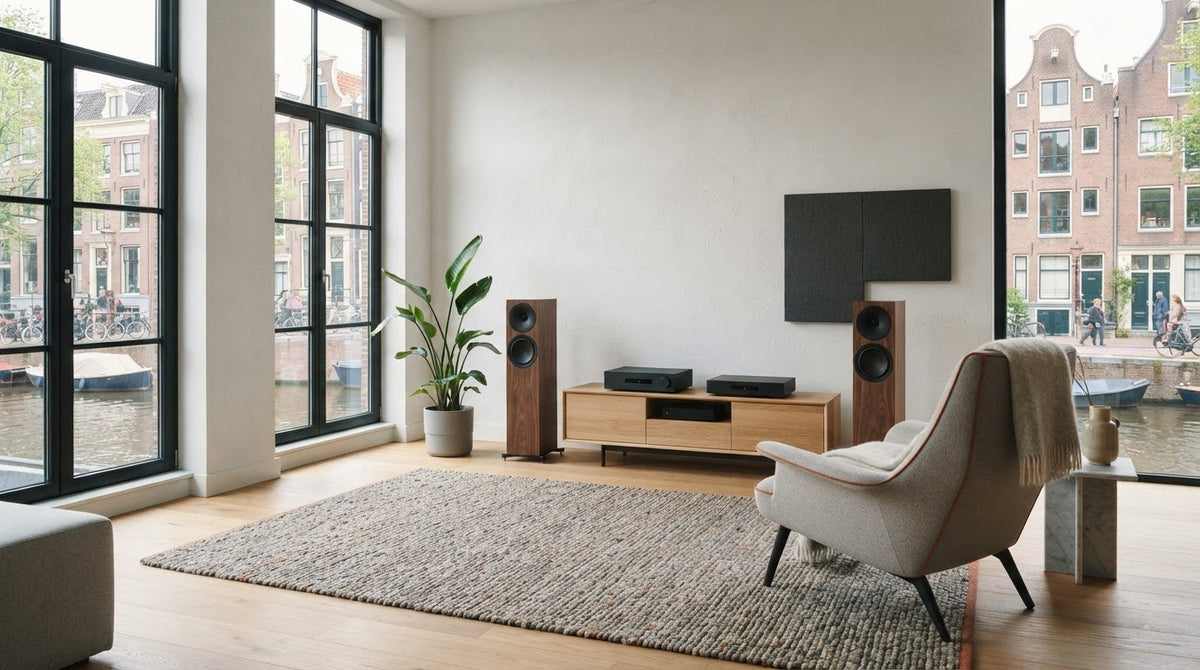
What if you could give music at home more detail and space without immediately buying new equipment? A convincing listening experience does not necessarily start with a more expensive system. The room, the placement of your speakers and your listening position can make a difference.
You may find technical terms difficult to compare, or you may be unsure whether your space, setup or equipment limits your listening pleasure. Those factors work together. Creating an audiophile experience at home therefore starts with looking and listening carefully, not with just purchasing something.
In this article you will discover how to improve your listening position and speaker setup, what role acoustics play and how to choose equipment that suits your space, music and use. This way you get more out of what you already have and you can assess whether a suitable speaker, amplifier or streamer is a useful next step.
Key Points
- Discover how room, listening position and speaker setup together determine how you experience music.
- Compare passive speakers with amplifier and active speakers to see what suits your use fits.
- Learn what role an audio streamer plays when you listen to music digitally.
- Follow a practical step-by-step plan and use familiar music to honestly assess changes in the setup.
- Discover how to get more out of your listening position step by step before you consider expanding thinks.
What does creating an audiophile experience at home mean?
An audiophile experience at home means listening to music consciously and attentively, with a display that suits the recording, your space and your personal preference. It's not just about equipment, but about the combination of the room, the speaker setup, the recording and your way of listening. The explanation about hi-fi sound describes the pursuit of a faithful reproduction. At home, this mainly means that you can listen to music comfortably and clearly, not that you have to chase a technical benchmark.
A higher purchase price does not automatically guarantee more listening pleasure. A system must fit the space and what you want to do with it. A carefully chosen set can better suit your situation than a more expensive system that does not perform well. Therefore, start by listening and determining what you find important. Only then assess whether the setup or equipment requires adjustment.
Which features make listening at home more immersive?
Pay attention to what you actually hear. Are the vocals clearly audible? Can you tell instruments apart? Does the music sound like a coherent whole, without one part dominating the rest? In a busy arrangement, for example, you want to be able to continue to follow the voice when guitars, keys and drums are playing along. Anyone who plays acoustic instruments themselves or is familiar with specialist shops such as Sound Shop (Sound-tech d.o.o.), often immediately recognizes how dynamic and rich the real sound of wind instruments and percussion should be.
The ideal sound is personal. Some people like to pay attention to details in a quiet recording, while others especially appreciate convincing bass in electronic music. For example, well-produced tracks from a professional recording studio like Starsound Studios show how much depth and balance can be in a mix. A live recording can also bring out different qualities than an intimate acoustic song. Use different types of music to clarify what you find important. There is no one-size-fits-all preference.
Start with your listening goal, not a specification list
First, think about how you usually listen. Is music often in the background while you read or cook? Or do you consciously take a seat to hear an album from start to finish? That difference helps determine which features count for you.
Also write down which sources you use, such as digital music or records, and which genres you often listen to. This makes it clear which adjustments may be relevant. If vocals lack clarity, you look at your experience differently than if you are mainly looking for more convenience when playing music. Let your answers provide direction, not loose specifications that say little about how you want to listen at home.
How does your room and speaker setup affect the audiophile experience?
Your room and the placement of your speakers are part of your audio system, because sound behaves differently in every room. Sound bounces off walls, windows, and other hard surfaces. This can cause vocals to sound less clear or music to appear restless. Furniture also affects those reflections. How you experience sound does not only depend on the equipment, but also on how the sound arrives in your room. This is in line with research into sound perception Psychoacoustics Laboratory from Boston University.
Choose a suitable listening spot and place yourself speakers consciously
Start where you usually sit. Listen to a familiar song there and notice whether the vocals and instruments sound clear and balanced. Then check the placement of your left and right speakers. Are they a similar distance from the walls and do they both have enough free space? A large difference between left and right can make the soundstage feel unbalanced.
There is no set spot that works best for every room and speaker . Therefore, do not move everything at once. First move one speaker a small distance and listen to the same fragment again from the same seat. Then test a different listening position if necessary. This way you can notice what change makes a difference, without having to guess.
Listen to the room before considering acoustic solutions
You can do simple tests with music you know well. Does a handclap resonate for a long time in the room? Do you hear a sharp reverberation when singing? Does the bass change noticeably when you sit somewhere else? Such signals help you determine whether reverberation, reflections or your listening position deserve attention.
Also pay attention to hard surfaces and furnishings. Curtains, a rug or furniture can affect the way sound travels through the room. The effect depends on the space and placement. Change one thing at a time and listen again. This way you avoid adjusting something without knowing what you want to improve.
Would you rather keep speakers out of sight? Then view the options for built-in speakers for your living room and also take the space and your listening position into account. Small, deliberate tests help you discover how to better tailor the sound to your room.
Which equipment suits your audiophile listening experience at home?
The right set starts with your space and listening habits, not with a long list of specifications. With a traditional stereo set, you connect passive speakers to a separate amplifier. Active speakers have built-in amplification, so you need fewer separate parts. Which structure is suitable depends, among other things, on the location you have and how you want to play music.
An audio streamer is a source for digital music. You use it to send music to your audio system via a network or music service. A subwoofer can be an addition if you are looking for more emphasis on bass, but is not a mandatory step. When making your choice, also take into account the relationship between the room and the system, as the guide to tuning a listening room describes.
| System construction | Required parts | Point of attention |
|---|---|---|
| Passive stereo set | Passive speakers en amplifier | Check that the amplifier and speakers are compatible and the connections match. |
| Active speakers | Active speakers and a suitable music source | See what connections and playback options the speakers offer. |
| Set of audio streamer | Streamer and a suitable audio system | Check how the streamer is connected to the amplifier or speakers. |
When do you choose bookshelf speakers, floor standing speakers or active speakers?
Bookshelf speakers are an option if your bill want to do with limited space or a specific setup. Floor standing speakers take a different spot. Active speakers may fit if you prefer to combine fewer separate components. The choice depends on your room, the available space and the rest of the system. Take a look at the bookshelf speakers and compare them to floorstanding speakers before you decide.
What do an amplifier, streamer and subwoofer do in the system?
The amplifier drives passive speakers . The streamer delivers digital music to your system. An subwoofer produces low tones and, depending on your set and listening needs, can be a useful addition. Always check the connections and mutual compatibility, as these may differ per combination. If necessary, delve further into hi-fi amplifiers and audio streamers. This way you can choose targeted equipment and create an audiophile experience at home step by step.
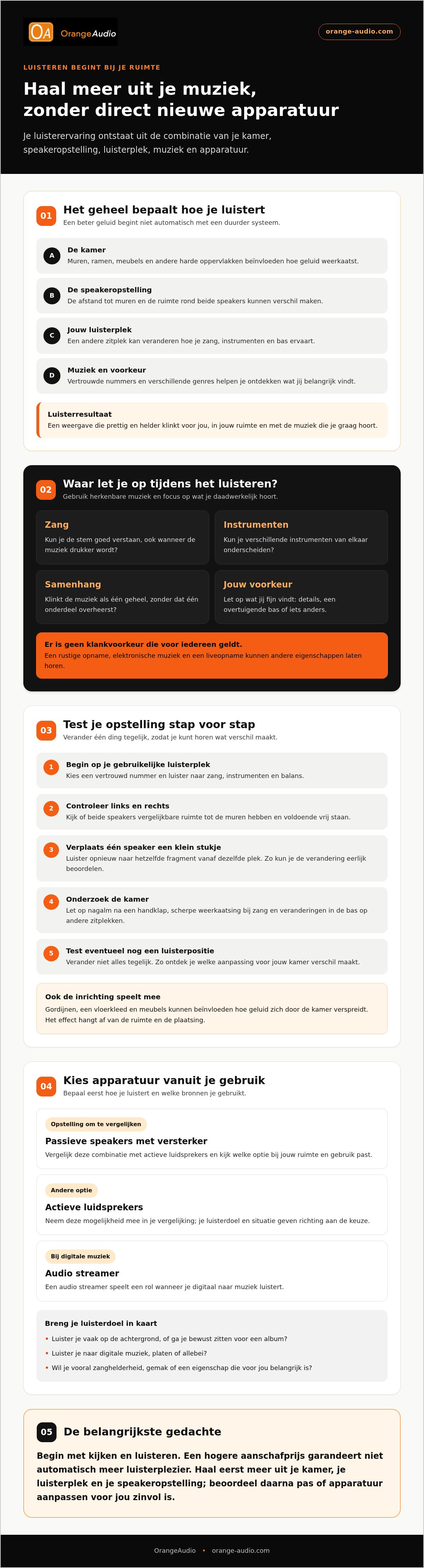
How do you improve the sound experience at home step by step?
You do not have to replace parts immediately. Work from simple to focused: first determine what you want to improve, listen consciously and then change one thing at a time. This way you discover whether the setup, a connection or another part requires attention later. Write down what you adjust so that you can go back to the previous situation.
- Determine your goal. Write down what you miss. Do you want to be able to follow your singing better, does the music sound restless or do you want to listen more comfortably? Choose one focus.
- Listen to a familiar song. Always use the same music and listen from the same place. Pay attention to vocals, instruments and how pleasant the whole thing sounds.
- Adjust one thing. For example, move a speaker or change your listening position. Leave other parts untouched, otherwise you won't know which change made a difference.
- Compare and evaluate. Listen to the same fragment again. Note what you notice and whether the change helps with your original goal. If the result is less pleasant, restore the previous setup.
- Check the system before expanding. Check whether your music source, amplifier and speakers are compatible and whether the necessary connections are present.
Test one change at a time with familiar music
Make your notes concrete. For example, write: “the vocals sound less clear” or “the bass feels restless at my listening position”. After a small adjustment, compare the same passage again. Do you hear the voice better now? Are instruments still easy to follow and does listening remain comfortable? What works in your room may not necessarily give the same results in another room.
Check connections and system match before expanding
Are you unsure about a possible upgrade? First check how your source, amplifier and speakers are connected. View the connections and product specifications on the product page or from the manufacturer. This way you avoid choosing a part that doesn't match the rest of your set. If you know what is missing, you can look further.
Does it appear after your tests that your speakers do not fit well with your room or listening purpose? View the speaker options of OrangeAudio and compare which category suits your setup. This way you can improve your listening experience step by step without seeing a purchase as the first solution.
How do you further expand your audiophile experience at home?
Keep the same order before you add anything: start with your listening goal, assess the room and its placement, check whether the parts fit together, and then explore an extension. This way you focus on a concrete bottleneck instead of on specifications that may not be relevant to your use.
When is a targeted upgrade more logical than a completely new system?
A targeted expansion is worth investigating if you continue to experience the same problem after adjustments to the setup. If the size of your current speakers does not fit comfortably in the available space, compare different types of speakers. If you are mainly looking for an addition to the bass, see whether an subwoofer suits your system and listening needs. Neither is automatically necessary.
Also look at the parts you already have. Check which connections are available and whether a new speaker, streamer, amplifier or subwoofer works with it. Sometimes a clear need requires one other component. Sometimes your existing set turns out to be suitable as soon as the placement is correct.
Make your next step fit your listening habits
Think about how you play music. Do you mainly listen via a streaming service, or do you also use a record player or another source? No one listening method is best for everyone. Choose equipment that suits the sources you actually use and check the connections and options on the product page.
If you use Roon, pay attention to the Roon Ready statement when choosing a streamer and check the compatibility of the specific product. This way you avoid expecting a function that does not suit the chosen combination. Choose based on your own wishes, not on a facility you don't need.
OrangeAudio is a specialized hi-fi store, founded around 2012. Do you want to look further after you have listed your listening goal and system? View the range of speakers, amplifiers and audio streamers and discover which category suits your space and music. This way you can continue to build on your listening experience at your own pace.
Get more out of your music step by step
Creating an audiophile experience at home does not start with the most expensive equipment, but with attention to what you hear. Determine what you want to improve, listen at your regular location and adjust the speaker setup step by step. Use familiar music to honestly compare changes. Only then assess whether another speaker, amplifier, streamer or subwoofer adds something.
Take your room, listening habits and existing components into account with every possible expansion. Check connections and compatibility before making a choice. If you are looking for a Roon Ready streamer, check per model whether that functionality is supported.
Start with small, deliberate steps and determine which part suits your listening needs. Discover the hi-fi range of OrangeAudio and compare speakers, amplifiers and audio streamers for your system.
Frequently asked questions about audiophile listening at home
What does audiophile listening mean at home?
Audiophile listening means paying conscious attention to how music is reproduced at home. For example, pay attention to intelligible vocals, instruments that you can easily distinguish from each other and a pleasant balance. There is no set-up that is ideal for everyone. Your room, music preference and listening habits together determine what sounds convincing. Listen to music you know well and decide for yourself which features are important to you.
Can I create an audiophile experience at home without expensive equipment?
Yes, start with the room and the equipment you already have. For example, change your listening position or move the speakers a little bit. Compare the result with familiar music and change one thing at a time. This way you can discover whether a practical adjustment helps before you buy something new. If there remains a clear area for improvement, investigate which equipment is suitable and check whether it fits in with your existing system.
How do I place speakers for a better listening experience?
Start with a setup in which both speakers are as equal as possible to your listening position. Pay attention to the distance from walls and large furniture and change the position in small increments. Listen to the same music again from the same place after each change. This way you can better assess differences. Suitable placement depends on your room and speakers. So use general guidelines as a starting point, not as a guarantee for optimal results.
Do I need an subwoofer for an audiophile experience?
No, an subwoofer is not necessary. Such a speaker can be an addition if you want to experience the low tones differently, but the need depends on your room, music and personal preference. First listen critically to your current system and identify what you are missing. Then investigate whether a speakers, room, music and personal preference. First listen critically to your current system and identify what you are missing. Then investigate whether a subwoofer suits this. Also check whether the connections and settings are suitable for the combination with the rest of your set.
What is more important for good sound: the room or the speakers?
The room and speakers work together. Good speakers do not automatically sound the same in every room, because placement and reflective surfaces can affect the reproduction. Therefore, start listening in your own room and test small adjustments to the setup. If you know what you want to improve, you can better judge whether the space, placement or speakers need attention. This way you avoid replacing equipment before you know the bottleneck.
How do I put together my hi-fi system at home step by step?
Start with your listening purpose, the available space and the music sources you use. Then compare a set with passive speakers and an amplifier with active speakers. Before you make a choice, check whether the connections and parts match. Then test the placement with music you know well. Only expand your system once you have identified a specific area for improvement. This way you can purposefully build a set that suits your use.
Does an audio streamer automatically make my installation audiophile?
No. An audio streamer is a source for digital music, but it does not alone determine how your entire system sounds. The speakers, amplification, connections, room and placement also play a role. First decide how you listen to music and what features you need. Then check whether the streamer connects to your existing equipment. If you are looking for Roon Ready functionality, check per model on the product page whether that function is supported.