
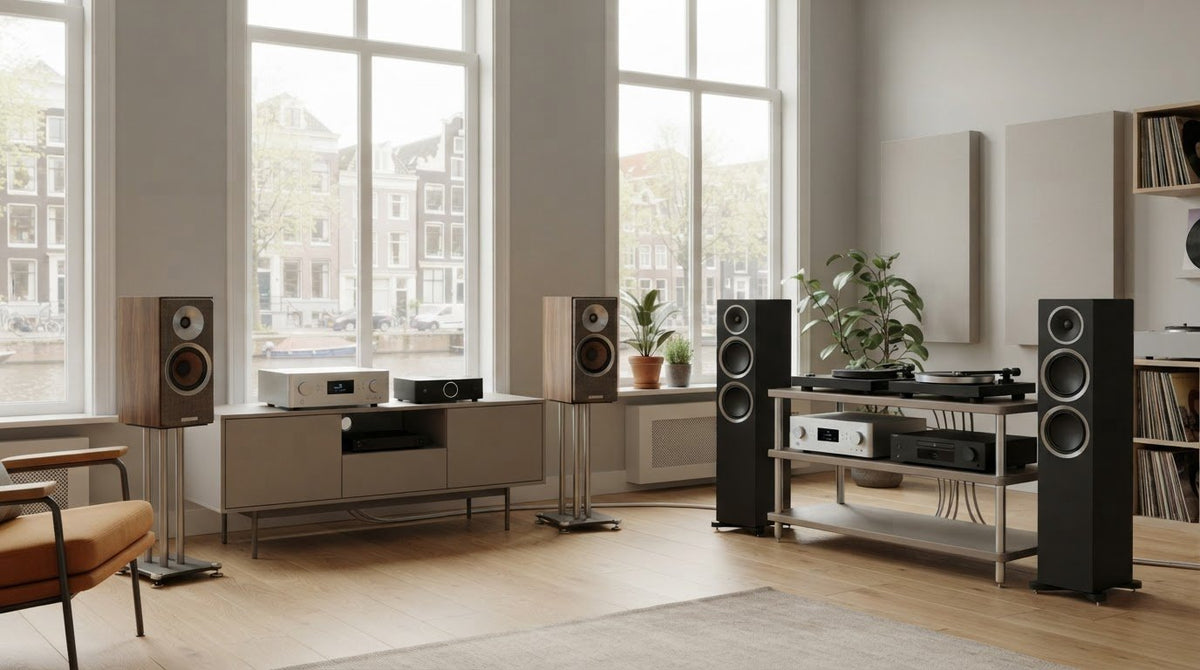
A completely new hi-fi set is not automatically the best upgrade. If you're hesitating between upgrading or buying a completely new hi-fi set, start with one question: which part is holding back your listening experience? Maybe your speakers still sound exactly the way you want, but you miss modern connections. Or does your amplifier no longer suit the music sources you use every day.
It is logical that you do not want to invest in an adjustment that barely makes a difference. At the same time, one well-chosen new part can make your set meet your needs again, without having to replace everything. Therefore, determine what still works well, what no longer fits and whether your equipment technically works well together.
In this article you will discover when a targeted upgrade is sufficient and when a complete system offers more possibilities. You learn to recognize the limiting link, check connections and compare combinations honestly. Here's how to choose based on your equipment, listening habits, and long-term plans.
Key Takeaways
- First determine if you're looking to solve a listening problem, are missing a feature, or have changed your listening style.
- Make a note of your music sources and assess the source, amp, and speakers individually to find the limiting link.
- Compare a single upgrade with a complete set at sound goal, preservation of equipment, functions and required tuning.
- Formulate one concrete improvement goal and compare systems with familiar music under similar circumstances.
- Use a listening test and personal advice to discover which combination of source, amplifier and speakers suits your needs.
Upgrading or buying a new hi-fi set: what are you trying to improve?
Does your hi-fi set still sound nice, but does it no longer suit what you want to do with it? Perhaps you mainly listen via streaming these days, you want to hear the sound of your television over your speakers or you are looking for more convenience in daily use. Those are different wishes. They do not automatically ask for the same solution, and certainly not always for a completely new set.
Do not start with the device you want to buy, but with what you want to change. Hi-fi is all about a coherent reproduction of music and sound, as is also described by the general term hi-fi sound reproduction . In your living room, what matters most is how the source, amplification and speakers work together and connect to your use.
What change do you want in your listening experience?
Make your wish concrete. Do you miss detail in music, does the balance sound unpleasant, are there connections missing or does it take too much effort to play music? A missing function is different from a sound problem. If your set sounds good but does not have a suitable connection for a source that you use more often, a targeted adjustment may be enough. If you don't like the sound itself, investigate which components may play a role.
Also separate your different listening moments. For music, your favorite sources and speakers can be decisive. For television, the connection to your imaging equipment and ease of use may be more important. Write down what you listen to, what devices you connect and when you are dissatisfied. This way you can see if you are missing one function or if several parts no longer fit.
Then ask yourself: what improvement would I actually Brands en appreciate? A new look or additional features may be attractive, but they are not an end in themselves. If your existing speakers still suit your taste, explore whether you can keep them. For example, think about what you expect from your bookshelf speakers before replacing them.
When does a new set better suit your plans?
A new set is worth considering if several parts do not match your desired setup. Maybe you want to use different sources, play music more easily and improve the sound of the television at the same time. A new combination of source, amplifier and speakers may then be more logical than separate adjustments that each only solve part of your wishes.
A different room layout can also change your choice. Speakers that initially fit well may not fit as well when the listening position or available space shifts. Think ahead: how do you want to use the set, which equipment will remain part of your daily routine and how much simplicity are you looking for? In this way, assess the entire context, instead of choosing one piece of equipment separately.
Don't replace equipment just because it has a long service life. Age in itself does not tell you whether a component still suits your needs. Instead, ask yourself this question: can I achieve my main improvement goal by replacing one part, or does my new use require a different combination? That is the essence of upgrading or buying a completely new hi-fi set. This way you don't write off well-functioning equipment too quickly, but you also leave room for a fresh start if your plans require it.
This is how you discover which part of your hi-fi set needs an upgrade
You have determined your improvement goal. Now map out how you use the set and which devices are connected to it. This prevents you from replacing a component while the cause lies elsewhere.
- Note your sources and usage. Write down what you listen to and what devices you connect, such as a record player, streamer or television. Also mention which sources you would like to use more often. This way you can see which connections and functions are important for daily use.
- Rate the source. Does the problem only occur with one source, or do you notice it with everything you play? If playback or connection is particularly difficult, your focus may be on the source or available features rather than the speakers.
- View the gain. Does the amp match your speakers and the way you listen? Also look at controls and connections. For more information on the role of this component, see the guide to choosing a hi-fi amplifier.
- Listen to the speakers again. Does their sound still suit your taste and the room in which you are listening? If you mainly want to change the display, compare different speakers. That does not automatically mean that they are the only cause, but it does give you a concrete next step.
Assess each part individually
A change in sound cannot automatically be attributed to one device. The source supplies the signal, the amplifier controls the speakers and together these components determine how your set sounds. The listening room and the placement of the speakers also play a role. Therefore, do not change multiple components at the same time if you want to discover where a difference comes from. Compare with the same music and settings. This will help you better assess whether an adjustment achieves your goal.
Check features and connections
Distinguish between a missing feature and a display problem. For example, if you want to connect an additional source, note which device you want to use and which connection is required. If you are satisfied with the operation, but not with the sound, keep those points separate. Use this checklist:
- Which sources are you currently using and which do you want to add?
- Which connection or function are you missing specifically?
- What do you want to change about the sound?
- Which component can you compare first?
Choose one component that is most directly related to your improvement goal. Then the trade-off between upgrading or buying a completely new hi-fi set becomes clearer: can you keep the rest and still achieve what you are looking for, or does your use require a new combination? View Hi-Fi components to explore options for your set.
Upgrade vs. new hi-fi set: compare both options
You don't have to choose between keeping everything and replacing everything. There is often an intermediate step: only replace the source, amplifier or speakers that no longer connect. Compare the options for what they change for your listening purpose, what equipment you keep, and how much tuning the rest of the set requires. So look beyond one individual specification.
| Option | Expected change | What are you keeping? | New features and tuning |
|---|---|---|---|
| Upgrade source | Your main focus is on playback, controls, or a source you want to add. | Amplifier and speakers can remain if they suit your needs fit. | Pay attention to the connection to the amplifier and to functions that you will actually use. |
| Upgrade the amplifier | You change the central link between source and speakers. | You may be able to keep a suitable source and speakers. | Tune the amplifier to your speakers, sources and daily use. |
| Upgrade speakers | You choose a different sound or a shape that better suits your space. | Source and amplifier remain in place if they work well with the new speakers. | Assess placement and coherence with the rest of the set. Bookshelf speakers are one option, but not automatically the right one for every room. |
| Renew complete set | You rearrange the entire system around your current wishes. | Only parts that consciously fit into the new arrangement. | Source, amplification and speakers are selected as a combination and matched to each other. |
When is targeted upgrading the most logical choice?
Targeted upgrading is obvious when one shortcoming is clear and the rest of your set still suits you well. While you're happy with your amp and speakers, think about a source you want to add or a missing feature. By retaining appropriate components, the change remains manageable. Make sure to check how the new part fits in with what you already have.
When does a new set provide more coherence?
A complete set may fit better if several parts at the same time no longer match your use or setup. You then choose one combination instead of several separate steps that you have to coordinate again and again. For example, if you want more layer rendering, investigate whether an subwoofer supports that goal. Do not automatically replace your entire system.
Before you decide, compare the total investment of both routes. With a targeted upgrade, take into account what you keep and what is still needed for the new part to work well together. Compare that with the parts of a new set and the functions you want to add. Make the comparison with the current prices of the chosen components, not with a general total that is not based on your situation.
Make the choice based on coherence: how well do the source, amplifier and speakers match your sources, room and listening purpose? An impressive individual specification does not automatically indicate whether you will notice the difference every day. The question is not just which option changes more, but which change you are really looking for. In this way, upgrading or buying a completely new hi-fi set becomes a trade-off between targeted maintenance and a new combination that better suits your plans.

Make your choice with a practical listening test and a clear step-by-step plan
A listening test makes the choice tangible. You don't have to judge technical terms or find one universally best sound. Compare what you hear now with what you want to achieve. A clear approach helps you identify differences without a new set automatically seeming better because it is new. Brands without a new set automatically seeming better because it is new.
This is how you make a listening comparison fairer
Prepare the test briefly. Choose music you know well and write down your current settings, such as the sound source and any adjustments to the sound. Then formulate one listening goal: do you want to understand your singing better, have a more balanced sound, more audible details or, above all, continue to listen with more pleasure?
When comparing, use the same music fragment and the same listening question. Keep the conditions comparable and do not change all kinds of settings at the same time. Otherwise it is difficult to determine what causes a difference. Immediately after each fragment, write down your first impression in plain words, for example: “the vocals are clearer” or “the balance feels better”. That is more useful than a technical judgment that does not match your experience.
Pay attention to four personal criteria:
- Intelligibility: can you follow voices and instruments comfortably?
- Balance: does the whole thing feel pleasant, or does part of the sound attract too much attention?
- Detail: do you hear nuances that are important to you?
- Listening pleasure: would you like to hear the fragment further?
No criterion is independent of your taste. One system can reveal more details, while you may prefer a different combination for long listening sessions. Therefore, also write down which set you would like to listen to again spontaneously.
Use your listening purpose to finalize the choice
The source you use can shift your priorities. With music, sound and ease of playback can be central. If you watch a lot of television, it is also important how well the sound matches the image and speech. If you listen mainly via streaming, operation may outweigh connections for sources you hardly use.
Put your notes next to the two routes: adjusting one appropriate part or renewing the set as a whole. Ask yourself which route will achieve your listening goal and which existing equipment you would enjoy continuing to use. If you're considering a larger speaker setup, the floorstanding speakers compare guide will help you explore that choice further.
Then choose one next step, not a series of purchases. First compare a suitable part or listen to a complete combination. This way you can decide between upgrading or buying a completely new hi-fi set based on what you hear yourself. Plan a listening appointment and compare hi-fi systems with your listening goal in mind.
Experience at OrangeAudio which hi-fi upgrade is right for you
You have your wishes listed and know what difference you are looking for. The next step is listening. During a free listening appointment or demonstration at OrangeAudio you can experience different options and receive personal advice. This way you not only assess individual properties, but also how a source, amplifier and speakers sound together.
Take your wishes with you to a listening appointment
Make a short note in advance. Include what music you like to hear, what sources you use, and what feature or change you are looking for. Also write down which parts you want to keep. A concrete goal, such as listening to music more comfortably or a better connection to your daily use, helps to keep the comparison focused.
Tell what you are missing and what is already working well. Then the conversation can be about a suitable adjustment to your speakers or amplification, or about a complete combination if several parts no longer suit your needs. You do not have to come in with a pre-chosen product. Start with the experience you are looking for.
Compare with your ears and choose with confidence
Listen to familiar music and pay attention to what matters to you: intelligibility, balance, detail and, above all, listening pleasure. Ask yourself whether a difference remains pleasant when you listen longer. A long list of features or impressive specifications does not automatically tell you which set suits your taste and use.
Personal guidance helps you compare options. Discuss what you can achieve with a targeted upgrade and what coherence a new combination offers. This way you can make an informed decision about whether to upgrade or whether buying a completely new hi-fi set better suits your plans, without having to decide immediately during the demonstration.
Make the appointment purposefully with your notes and listening purpose at hand. Also think about the resources you want to continue using and the parts you want to keep. This way, the comparison is tailored to your situation, rather than to a general preference for a certain type of system. Take the time to listen and ask questions about the role of the different parts.
Do you want to experience the possibilities yourself? Discover the hi-fi solutions from OrangeAudio and plan a free listening appointment or demonstration. You can also view the range and discover which speakers, amplifiers and audiosolutions suit your next step.
Direct your next listening experience
You don't have to commit to your choice right away. First determine which change is most important to you: a missing function, a different sound or greater ease of use in daily use. This way you can make upgrading or purchasing a completely new hi-fi set a choice that matches what you want to hear and use at home.
Make your next step concrete. Make a note of which parts you want to keep, which functions you are missing and what you find important in a new system. Use those points to compare options and assess which solution fits your long-term plans.
Discover the hi-fi solutions from OrangeAudio and see which options match your listening goals. Take your time and shape your next hi-fi experience based on what matters to you.
Frequently asked questions about upgrading or replacing hi-fi
Is upgrading a hi-fi set cheaper than buying a completely new set?
Not automatically. Whether upgrading is cheaper depends on which parts you can continue to use and which improvement or function you are looking for. Compare the costs of the part you want to replace and any additional components with that of a complete set that meets the same needs. This way you compare two concrete options. When upgrading or buying a completely new hi-fi set, the decision revolves around your equipment and listening purpose.
Can I combine my old speakers with a new amplifier?
That is sometimes possible, but the combination depends on the properties and connections of both devices. Make a note of the model information of your speakers and the amplifier you are considering. Also take into account how you listen and which sources you connect. A demonstration will help you assess whether the combination sounds pleasant. After all, the fact that plugs fit does not automatically indicate whether the display suits your taste.
Do I have to replace all parts of my hi-fi set at the same time?
No, not self-evident. Start by asking which parts still suit your use and which change has priority. If you mainly want to use a new source, that can give direction to your first step. If you have multiple wishes at the same time, a broader innovation may be worth considering. You can weigh options in phases, but assess each new combination on connection and sound before you decide.
Does a new amplifier always produce better sound?
No. A new amplifier does not automatically provide the improvement you are looking for. The outcome also depends on the source, speakers and the sound you like. First determine what you are missing and then compare specifically, for example with the same music and the same settings. New connections or functions can in themselves be a reason to innovate, but are separate from the question of whether you like the sound better.
How do I know whether my hi-fi set still suits my listening needs?
Make a short self-check: what are you listening to, what sources are you using, what functions do you want and what is missing while listening? Choose familiar music and write down what you notice, such as a balance you don't like or controls that don't fit your routine. Your taste is personal. A comparison with another combination can clarify whether your current set still matches your preferences.
Is a complete hi-fi set easier to use than separate components?
A complete combination is chosen as a whole, while separate devices require separate choices and tuning. That does not mean that every complete set works easier. Think in advance about your resources and the features you need on a daily basis. Also try the controls during a demonstration: can you choose the music source and adjust the volume in a way that feels comfortable? Ease of use is often only noticeable when you experience the operation yourself.
Can I stream music with an older hi-fi set?
That depends on the source equipment and connections that are already present. A audio streamer or network receiver may be a possible solution, but operation with your older devices depends on their connections and features. Write down the model names and compare them to the features you want to use. For additional explanation, you can also read the guide on putting together a hi-fi system and compare the points of interest with your own set.