

A good outdoor audio system does not start with choosing individual speakers, but with the places where you want to listen. On the terrace, in the lounge corner or throughout the garden: the layout determines how many speakers you need and how you place them. This way you can put together an outdoor audio system garden that suits your space and listening needs, instead of starting with equipment that may not fit properly.
Of course you want clear sound outside, but it is understandable if you have doubts about the right setup. How many speakers do you need? Which amplifier and music source are suitable? And when is one listening zone enough, or are multiple zones more convenient?
Discover how the components of an outdoor system work together and how to think step by step about coverage, placement and connections. We also look at the difference between separate outdoor speakers and a multi-zone system. This gives you a practical starting point for outdoor music that suits your garden and the way you like to listen.
Key Points
- First map out your listening locations and desired listening direction. This way you can tailor the setup to how you use the garden.
- Follow the route from music source to control and speakers to determine which components your system needs.
- Compare wired and wireless solutions for construction and flexibility before making a choice.
- Also take seating areas and flexibility into account when planning. walking routes.
- Discover how outdoor audio and multiroom audio fit the way you want to operate music in different places.
What completes an outdoor audio system for your garden?
A speaker on the terrace can play music, but does not automatically create a suitable garden system. The music source, control and speakers must match each other and suit the places where you like to sit. So start with the question: where do you want to hear music and how do you want to operate it?
A complete audio system consists of a music source, a component that controls the music, and speakers that reproduce the sound. This simple premise will help you determine which components are needed and how they work together.
Which components make up a garden system?
The music source provides the sound. This could be, for example, a telephone or audio streamer . The control lets you choose music and send it to the right speakers. Amplification allows the signal to play the speakers . With passive speakers requires a separate amplifier for this; active speakers have built-in amplification.
The desired setup determines which parts you need. If you want music in one seating area, a source, appropriate control and a set of outdoor speakers can form the basis. If you want to control music in multiple places, additional speakers and a setup with multiple zones may be relevant. The relationship between the parts is more important than just the number of speakers.
Do you want to understand how an speaker converts electrical sound into vibrations that you can hear? Then read more about the operation of speakers. This way you can also see why the location of a speaker influences how music arrives at your listening position.
Start with the places where you want to listen
Grab a map or make a simple sketch of your garden. Mark the terrace, the dining table and other places where you regularly stay. Note for each location whether you want background music, for example while eating, or whether you want to listen attentively. That will help you determine the desired coverage and direction.
Next, look at sight lines and distances. A wall, fence or dense planting can interrupt the direct path between speaker and the listening position. It also makes a difference whether a speaker is far from the seat or is aimed at it. So plan the setup around where people sit, not just around a corner where installation seems easy.
Also think about how you use the garden. An speaker that is aimed at one fixed table location may not fit as well if you often switch between the dining table and the lounge corner. Map those habits in advance. This way you can choose more consciously between one listening position and a wider distribution and prevent part of the garden from falling outside the desired coverage.
How do speakers, amplification and music source work together outside?
A piece of music travels a fixed route before you hear it in the garden. The music source provides the signal, the controller determines what is played and where it goes, and the speaker converts the signal into audible sound. The equipment that carries out those steps varies per setup. Sometimes functions are combined in one device; sometimes the system consists of separate parts.
The role of speaker and amplifier in outside audio
A speaker produces sound. The amplification ensures that the audio signal can drive the speaker. An amplifier makes an audio signal powerful enough to reproduce passive speakers to reproduce sound. With passive outdoor speakers, the amplifier is a separate component. Active speakers have built-in amplification, so you do not need to add a separate amplifier in the same way.
The signal route can look like this: a streamer picks up music, an amplifier receives and amplifies the signal and the connected passive outdoor speakers play the music. With active speakers the route is different, because the amplification is part of the speaker. Therefore, do not only look at the speaker, but also at the connections and functions of the equipment you already have or want to use.
Adjust the parts to your desired setup. Think about the number speakers, whether they are active or passive and what equipment controls the music. Would you like more background on functions and connections? Then take a look at a guide to buying a hi-fi amplifier to better understand the role an amplifier will play in your system.
How do you choose a music source for the garden?
Streaming is a practical way to supply music: you select music via a suitable device and forward the signal to the rest of the installation. A audio streamer can play a role in this. A record player can also fit, but the connection to the control or amplifier differs per device. So don't assume that one connection works for every setup.
Map the route in advance. Make a note of which source you want to use, which device controls the speakers and how the components are connected to each other. Then check whether the connections of the selected equipment match each other. This way you avoid choosing a source that does not fit well in the intended setup.
A Roon Ready streamer can be interesting if you are looking for a streamer that suits your way of managing music. The term does not mean that every part in a system works together automatically. Therefore, coordinate the source, control and speakers as one whole. If you want to control music in multiple places, discover the possibilities of multi-room audio.
Wired, wireless or multiple zones: what suits your garden?
The best choice depends on how you want to operate music, how you set up the installation and in which places you want to listen. A wired setup can suit a permanent installation where you plan cable routes in advance. Wireless gives more freedom in placement, but requires attention to the connection. Multiple zones are especially useful if you want to operate different places separately.
When is a wired or wireless setup suitable?
With a wired system, you connect components with cables. Therefore, determine in advance where the speakers will be located and how the cables will properly run there. This requires planning, especially if you are still creating or adapting the garden. A wireless setup limits the required speaker cables between components, but the connection for the music remains important. Look at your equipment, its installation and the desired operation: neither choice is automatically the best for every garden.
| System type | Practical benefits | Points of attention |
|---|---|---|
| Wired | Fixed connection between connected components. | Plan the cable route and speaker locations in advance. |
| Wireless | More freedom when placing components. | Take into account the connection between the music source and other equipment. |
| Multiple zones | Different garden areas can be operated separately. | The setup requires appropriate control for the desired zones. |
Use the table as a first choice aid, not as a fixed ranking. For example, a wireless source can be associated with speakers connected via cables. So you can also choose a combination, tailored to the places where you want to hear music.
What does multiroom mean for music in the garden?
Multiroom audio is relevant when you want to control music in multiple places, for example inside and outside or in different places in a spacious garden. If you want to hear the same music everywhere, the controls can coordinate the playback in those places. If people on the terrace and at the dining table prefer to hear something different, think about separate zones and their operation.
Make that choice based on your use. If everyone usually sits outside together, one listening zone may be sufficient. If you often switch between separate places, decide whether you want to operate them separately. Check out the options for multiroom audio if you want to control music in multiple rooms or zones.
When choosing outdoor speakers, don't forget the IP ratings for speakers . These standardized indications provide information about protection against dust and water. Compare the classification with the place where you want to use the speaker and take into account the exposure to weather influences. This way you avoid assuming that every outdoor speaker offers the same protection.
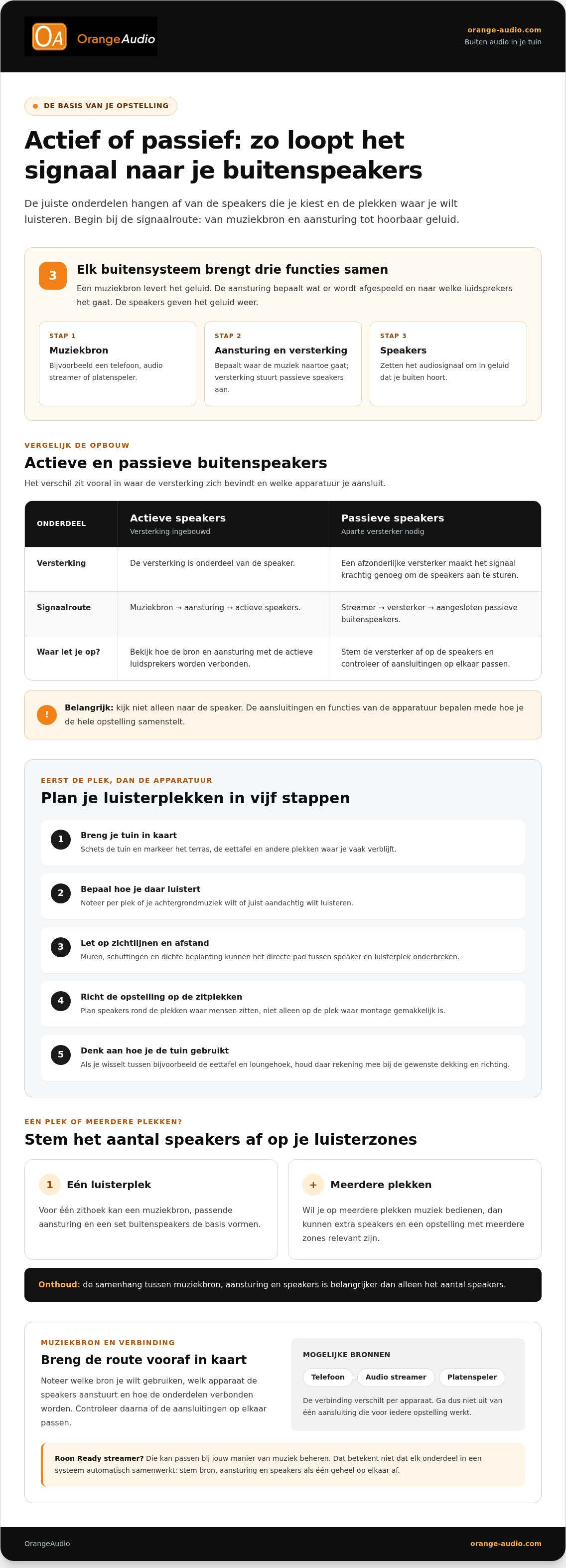
This is how you plan the placement and composition of your outdoor audio system
A smart plan starts with your garden and only ends with the choice of speakers and other equipment. This way you avoid choosing a system that does not match your seating areas, desired controls or available connections. By first determining the placement, you choose equipment that suits your listening locations instead of adapting your garden layout to the speakers after the fact.
Map listening locations and speaker positions
Simply draw your garden on paper. Make note of where you sit, eat and relax. Also include fixed elements on the sketch, such as a fence, canopy or large planter. They can determine where a speaker can be located and which direction is logical. Take walking routes into account, so that a speaker does not hinder the passage.
Then use this step-by-step plan:
- Draw the garden. Indicate the most important seating areas and fixed obstacles.
- Determine the listening places. Mark where you want to hear music and whether that is mainly background music or conscious listening.
- Choose possible speaker positions. Think about the distance to the seating areas and the direction in which the sound should play.
- Divide the garden into zones. Do this if you want to operate different places separately or if they clearly have a different use have.
- Then choose the system structure. Adjust speakers, control and any amplification to the floor plan and your connection options.
For one compact terrace, an arrangement around that one living area may suffice. If your garden has a terrace and a separate lounge area, check whether both areas need separate attention. More speakers does not automatically mean a better solution. Distance and listening direction help determine whether you want to distribute the sound evenly or focus it on specific seating areas.
Make a short list of system requirements
Before you compare equipment, determine how you want to play and control music. Also make a note of what audio equipment you already have. An existing amplifier, streamer or other music source can determine which connections you need. Then consider whether you want to hear the same music in multiple places or serve different listening needs.
- Which music source do you want to use?
- Do you want to control the music in one place or in multiple zones?
- Do you want to connect the garden setup to audio indoors?
- What equipment is already there, and which connections are available? available?
- Where can cables run, and where would you rather avoid them?
If you are considering an inconspicuous speaker solution, also include the appearance and intended location in your plan. An integrated solution requires a different consideration than a speaker that is visibly placed near a seating area. Discover the possibilities of outside audio at OrangeAudio and use your floor plan and list of requirements as a starting point for a system that suits your garden.
Discover outside audio at OrangeAudio and choose a system that suits you
You now have the most important choices in view: where you want to listen, how you want to control your music and which components are required for this. Use those principles to put together a system that suits your garden. A compact listening place requires a different consideration than multiple zones or music that you also want to operate indoors.
From listening needs to a suitable product category
Start with the floor plan and your way of listening. For one fixed seating area, you can focus on outdoor speakers and the equipment needed to control them. If you want to operate music in different places, also look at multiroom audio. The garden layout determines which route is logical, not a fixed number speakers.
Then consider the connections. A wired setup requires a well-thought-out cable route; In a wireless setup, the connection between music source and equipment plays a role. Also look at the parts you already own. This makes it clear whether you mainly need speakers or should also include a source or amplification in the system setup.
OrangeAudio has been a hi-fi specialist since 2012 and offers outdoor audio. Outdoor speakers are therefore a logical starting point if you want to bring music to your garden. If you want to coordinate the garden and other rooms, also view the options for multi-room audio. That category is especially relevant if operation in multiple places is part of your listening wish.
View your options at OrangeAudio
A good choice does not have to be complicated. Keep your wishes clear and compare the options based on three questions:
- Where do you want to hear music, and how many listening places do you really use?
- Do you want to operate one fixed setup or music in different places?
- Which music source, connections and equipment do you want to use in the system?
With those answers you can take a more focused look at the outside speakers and the components that fit with it. Make sure that the equipment you choose matches your existing system and the way you want to play music. This is how you build an outdoor audio system garden step by step that suits your use, without choosing parts that do not fit your plan.
OrangeAudio focuses on hi-fi and outdoor audio. View the range and discover which outdoor speakers and system parts match your listening areas and wishes.
View the outdoor range audio and take the next step towards music in your garden.
Turn your garden plan into a listening place
A suitable outdoor audio system garden starts with a choice that suits your daily use. Take your sketch of the garden and write down what matters most to you: quiet background noise on the terrace, music in different places or controls that match your existing audio. This way you turn individual wishes into a clear starting point for your next step.
You do not have to record every detail immediately. First determine which listening position has priority and which parts belong to it. Then think about expanding, for example if you later want to serve another place in the garden or home. A well-thought-out composition helps you make a targeted choice and prevents you from purchasing equipment that does not suit your plans.
OrangeAudio is specialized in hi-fi and offers outdoor speakers and multiroom audio. Compare the options with your listening needs and garden layout.
Explore the options for outdoor audio and provide your garden plan step by step shape. This way your idea grows into a listening place where you enjoy spending time.
Frequently asked questions about outdoor audio
What parts do you need for an outdoor audio system?
You need a music source, control, speakers and appropriate amplification. Which parts are separate depends on the selected equipment. Passive speakers requires a separate amplifier; with active speakers, the amplification is in the speaker. Make a list of your desired source and existing devices in advance. This way you can determine which connections and components make up your outdoor audio system garden.
Can I use my existing audio system in the garden?
This is possible if the connections and functions of your existing equipment match the outdoor speakers and the desired setup. If your amplifier has a suitable connection for the speakers, , it may be part of the system. Also check where the equipment is located and how the signal reaches the garden. A sketch of the source, amplifier and speaker connections makes it clear which parts you may still need.
Is WiFi necessary for outdoors audio?
No, WiFi is not necessary for every outdoor setup. The music can reach the equipment via different types of connections, depending on the selected source and devices. In a setup that supplies music via the home network or brings together multiple rooms, WiFi can play a role. So first decide how you want to play and operate. Then choose a system whose connections match that style of listening.
How do you determine how much speakers your garden needs?
There is no set number that works for every garden. Start with the places you usually stay and decide whether you want to operate one compact zone or dispersed listening areas. A small seating area requires a different distribution than a garden with separate dining and lounge areas. Draw the locations and determine per zone whether you want to hear music everywhere or only in certain seating areas.
What do IP ratings for speakers?
mean?IP ratings for speakers indicate how well a device is protected against solid particles and water. The code follows the letters IP: the first number stands for protection against solid particles, the second for protection against water. An X means that no number has been specified for that position. Compare the classification with the place where the speaker will be placed, for example sheltered or more exposed to weather influences.
Can I play the same music indoors and outdoors?
Yes, this is possible with a multi-room setup whose devices and controls are suitable for controlling indoor and outdoor speakers together. You can then play the same music in both places. Consider in advance whether you want to adjust the volume separately for each room and whether you sometimes want to choose different music. These wishes determine which operation and zone layout suit your use.
What should you pay attention to when placing speakers in the garden?
Pay attention to the direction of the speakers, the place where you sit and the way you use the garden. Take into account furniture that you move and plants that can grow denser later. Also consider the mounting and route of any cables, so that they do not run through a busy walking line. Place speakers so that they are aimed at the listening areas and match the layout of the garden.