
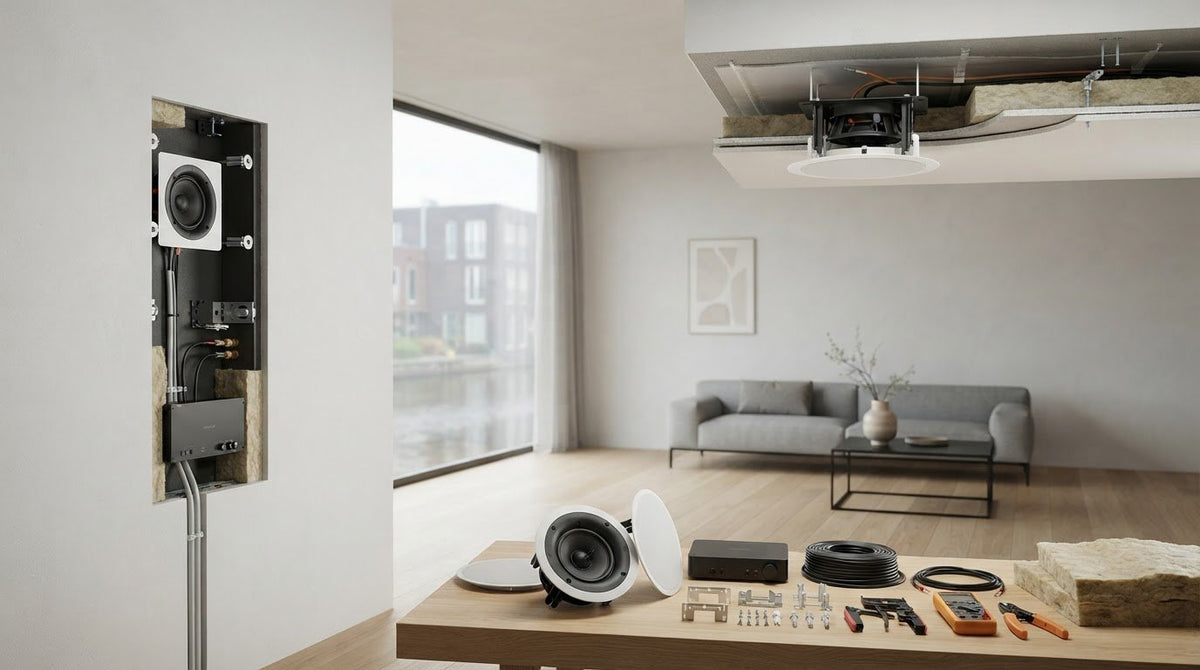
A speaker price is not yet a total budget. What expenses can be added in addition to the speakers ? Especially with built-in speakers, hidden costs of built-in speakers are not always immediately apparent: cables, a suitable amplifier and the preparation of the wall or ceiling can also play a role.
You want to know in advance what a complete installation requires, without overlooking any parts. Therefore, do not start with one individual speaker, but with the entire audiosetup. The size, installation depth and location of the speakers determine which models fit and what else may be needed. This way you get more control over your budget and you prevent a technical choice from causing surprises later.
Discover which cost items you can include, from cabling and connection materials to reinforcement and possible adjustments to the space. We show you how to compare options and determine priorities. This is how you draw up a more realistic total budget for music or home step by step cinema.
Key Points
- Identify possible hidden costs of built-in speakers in addition to the price of the speakers themselves.
- View which additional equipment, cabling or adjustments may play a role in your setup. Not every cost item is always necessary.
- Compare wall and ceiling placement based on the space and take size and installation depth into account.
- Set up your budget step by step based on your listening goal, the existing equipment and all desired components.
- Discover how to connect built-in speakers to a complete audiosetup and view the range of OrangeAudio, hi-fi specialist since 2012.
Hidden costs with built-in speakers: what is not included in the product price?
Why doesn't the price of a built-in speaker immediately show what your complete setup costs? Because the speaker can only be one part. Depending on the space and your plans, cabling, additional equipment or adjustments to the mounting location may also count. These are possible hidden costs for built-in speakers, not fixed surcharges for each installation.
One room is already prepared for audio, while in another room choices still need to be made about placement and connection. Therefore, make a distinction between the product price and the parts or work that your setup may require. This way you avoid mistaking the price of an individual speaker for a total budget.
What do we mean by hidden costs?
By hidden costs we mean possible expenses in addition to the speaker itself. Consider speaker cable, an amplifier if you still need it, or mounting material that suits the chosen situation. Which items are relevant depends on your existing equipment and how you want to use the speakers . Think of them as points of attention, not as mandatory components for every installation.
A speaker converts an electrical audio signal into sound. Anyone who wants to know more about the operation of speakerswill also see why an speaker is part of a larger system. Therefore, don't just look at the model, but also think about the connection and the equipment that controls the sound. If you already have a suitable amplifier and cabling, these parts may already be present. If something is missing, include it in your budget.
Why does the total budget differ per room?
A new room and an existing room do not always offer the same starting situation. In a room that is still being furnished, you can immediately include the speaker places and cable route in your plans. In a finished room, the available mounting location and the desired route can be decisive. This does not automatically mean that structural adjustments are necessary. First map out what is already present.
Wall and ceiling placement may require different product choices. The dimensions of the available space and the required installation depth also determine which speakers fit. One model may therefore be suitable for your space, while another is not suitable. View the built-in speakers in the range with those practical limits in mind. This way you not only compare features, but also how a product fits into the room.
The price of one speaker does not constitute a total budget, because the space, the placement and your existing equipment determine which additional components your setup may require.
- Note how many speakers you need and where they will be located.
- Make a picture of which amplifier and cables you already have.
- Write down possible mounting or space adjustments separately.
Use that list as a starting point, not as a fixed shopping list. Not every post will apply to your situation. In the following sections we explain possible cost items, so that you can determine more specifically what does and does not suit your plans. This way you build up a realistic budget step by step, without assuming one fixed total price in advance.
Which cost items can play a role in built-in speakers?
Which parts belong to your setup, except the built-in speakers? Visualize possible items separately. This way you can see where the budget could go and avoid including parts that you may already have. Hidden costs of in-wall speakers vary per project. An additional component is only relevant if the room, your listening purpose or your existing equipment gives reason for it.
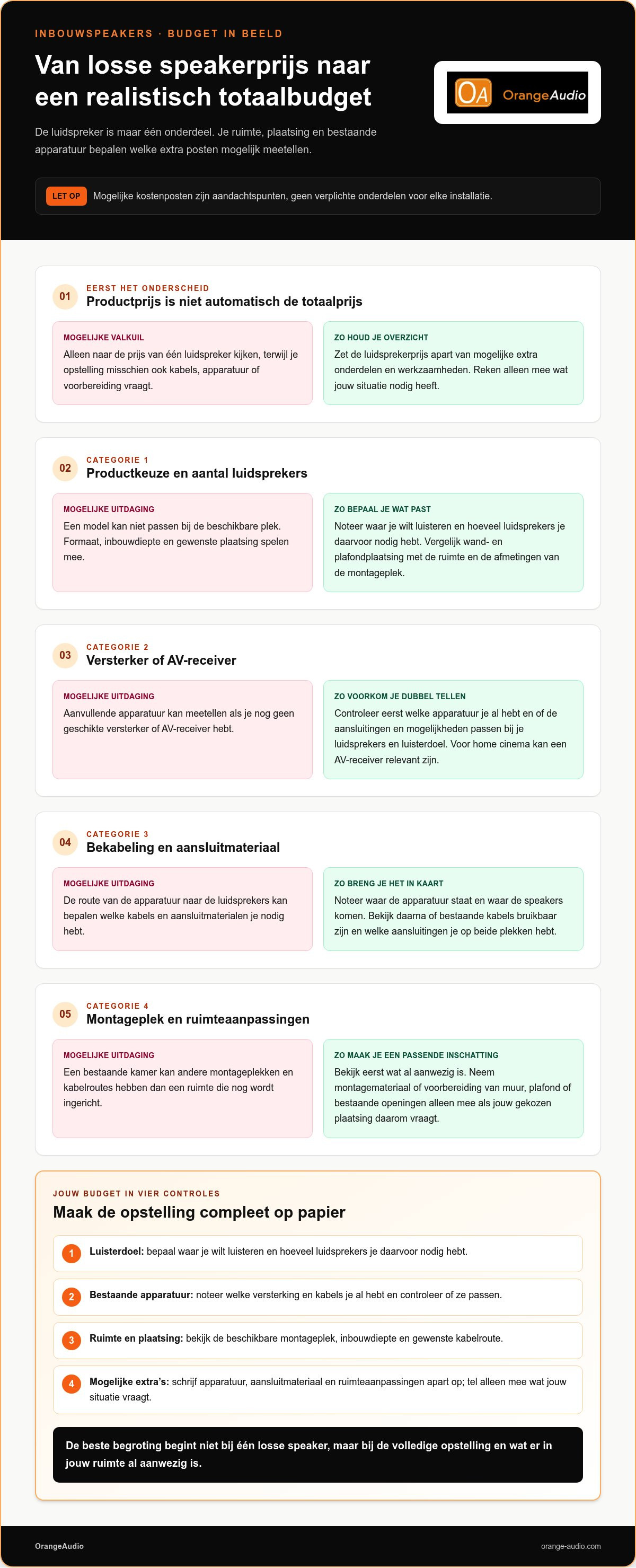
Use these four categories as a checklist, not as a mandatory shopping list:
- Product choice: the model and number of speakers that suit the room and use.
- Additional equipment: possibly an amplifier or AV receiver, depending on what you already have.
- Cabling and connection materials: possible cables or parts to connect the speakers to your equipment.
- Room adjustments: only if walls, ceilings or existing openings require preparation for the chosen placement.
Speakers, quantities and additional equipment
Start with the places where you want to listen. Do you want sound in one place or in different parts of the room? The number of desired listening positions helps determine how many speakers and which setup are appropriate. That makes the number of speakers a possible budget factor, but doesn't mean you need an speaker everywhere. Choose based on your listening purpose and the layout of the room.
Then look at your existing equipment. An amplifier or AV receiver is not an automatic additional purchase: you may already have one. Check whether the connections and options match the speakers and the use you have in mind. An AV receiver may be relevant for home cinema ; for other applications your current amplification may suffice. A subwoofer only appears if your desired listening experience requires it. Do not include it as standard in your budget.
Cabling and possible adjustments to the space
The cable route partly determines which cabling and connection materials you need. Note where the equipment is located and where the speakers are located. This way you can determine the route and check whether existing cables are usable. Also pay attention to the connections to the equipment and speakers. What you need depends on the chosen setup and what is already present.
The existing space also counts. A finished ceiling, a wall with an available opening and a room that is still being decorated may require different choices. Sometimes the desired speaker fits the spot; sometimes size or construction limits product selection. Do not assume any adjustments will be made before you have examined the space and placement options. Write down any work separately if it is necessary for your situation.
Your budget is determined by the combination of the speakers, the equipment you already have and the adjustments that your space may require. View the built-in speakers for different setups and compare models based on that combination. This way you leave room for what you really need, without overlooking possible items.
Comparing built-in speakers: which choice influences the total budget?
Choosing a suitable speaker does not start with the lowest product price, but with the question of how you want to use the speakers and where they can be found. Wall or ceiling placement, the available installation space and the difference between stereo and home cinema drive the product choice. Therefore, compare options based on suitability for your space and the requirements of your setup, not on unconfirmed price differences.
Wall or ceiling: which placement suits your plan?
First consider your listening position and furnishings. Wall placement can suit a listening setup where the speakers are focused on the room. Ceiling placement can match noise from above or a calm appearance. Also check the available installation depth: a model must not only fit in the location, but also have enough space behind the visible surface. Compare built-in with surface-mounted if both options are relevant for your room.
Size also plays a role. An existing opening or limited wall space may limit your choice. Therefore, adjust the dimensions of the speaker to the location you have in mind. Compare the built-in speakers in the range with those practical requirements in mind. This way you avoid choosing a model that does not suit the room.
Stereo or home cinema: tailor the set to your use
For music in stereo, the emphasis is on the speaker setup around your listening position. A home-cinemasetup may require different positions and additional equipment, depending on how extensive you want to make the system. Therefore, split your comparison into two steps: first determine which speakers suit the use and then see whether your existing amplifier or AV receiver supports the desired setup.
With an invisible living room set, how the speakers fit into the furnishings also counts. Focus on the listening experience you are looking for, not on the largest possible set. This way you keep the product choice and any additional equipment clear.
For example, create a comparison table without amounts. Note the choice for each option, the possible influence on your budget and the focus for your room. This way you not only compare individual specifications, but also the consequences for the complete setup.
- Wall placement: the product choice may depend on the available wall space and listening position. Pay attention to size and installation depth.
- Ceiling placement: the desired listening direction controls the setup. Map the available space above the ceiling.
- Stereo: determine which speakers suit your listening position. Include existing amplification in the comparison.
- Home cinema: a more extensive listening purpose may require more speakers or other equipment. Write this down separately from the speaker choice.
This way you can gain insight into the hidden costs of built-in speakers without considering amounts or parts as fixed in advance. The product choice, the space and the equipment together determine which options are relevant for your plan.
This is how you draw up a realistic budget for built-in speakers in advance
A clear budget starts with an image of the complete setup. First put on paper what you want to hear, where you want to listen and what equipment is already available. Then complete possible parts one by one. This way you distinguish between what you need and what may only be relevant in certain situations.
- Describe the room and listening areas. Note which room the built-in speakers will be in and where you usually sit or stand. Determine whether you are considering wall or ceiling installation. Take into account the location and available space for the speakers, because these determine which models fit.
- Determine your listening purpose. Do you mainly want to listen to music, watch movies or both? Describe the experience you are looking for and which parts of the room you want to reach. This will help you determine how many speakers you want to include and whether you have a stereo setup or a more extensive home theater system in mind.
- Take inventory of your existing equipment. Write down what amplifier, AV receiver, and other audio equipment you already have. See which connections and options are relevant to your plan. Only note equipment that may be missing as a point of attention. This prevents you from automatically counting existing parts as new expenses.
- Note the speakers and connection materials. Create separate lines for the desired built-in speakers, the number and the placement. Place cables and connection materials on their own line as a checkpoint. Determine whether you actually need them based on your equipment and existing connections.
- Mark possible adjustments to the room. Look at the walls, ceiling and any existing openings. Write down possible activities separately, but do not treat them as fixed costs. Whether anything needs to be adjusted depends on the space and the chosen placement.
- Compare different scenarios. For example, create an overview for music only and a second one for music and films. Compare the speaker choice, the equipment you already own and any additional components per scenario. Use columns for 'required', 'possibly required' and 'already present'. This way you can quickly see which choices affect your budget, without having to enter amounts or components in advance.
Do you want to include models in your comparison? Then view the built-in speakers in the range and note which options suit your space and listening purpose. Hidden costs of built-in speakers become more concrete: you not only assess a separate speaker, but also the components that your entire setup may require.
Choose built-in speakers with an overview and discover OrangeAudio
A suitable budget is created when you match the speakers to the room and the rest of your audiosetup. Consider the place where you want to listen, the equipment you already have and the components that may still be needed for your plan. This makes it clear which product choices suit your needs and which possible expenses you do not have to take into account.
When do built-in speakers suit your needs?
Do you want sound without loose speaker cabinets in sight? Then built-in speakers can suit your preference for a quiet appearance and integrated placement in the wall or ceiling. First look at the available space and the place where you want to listen. The speakers must match that environment and your purpose, such as listening to music or watching movies. So start with the complete setup, not just the appearance of one model.
Make it practical. Note where the speakers are required, which listening locations are important and which equipment controls the sound. Also take with you what is already present. This way you avoid basing your budget on a setup that is larger or more complicated than you need. Your wishes determine the direction; the space helps define the product choice.
Discover a suitable product category
Compare the properties of possible speakers with your listening purpose and the available space. For example, pay attention to the placement and installation depth, and see how a model fits into your existing audiosetup. This way you translate technical choices into what you need in practice. OrangeAudio sells built-in speakers and additional audio equipment, so you can view products for your setup side by side.
Are you clear about your listening goal and the available space? Then view the collection of built-in speakers. Compare the product options with your notes and note the dimensions and installation depth in relation to the space you have available. This way you can determine more specifically which models meet your needs, without assuming a fixed total price or unnecessary parts in advance.
Careful preparation will help you better understand the hidden costs of built-in speakers. Keep product selection, existing equipment, and room conditions together when weighing options. This way you build a realistic budget around the listening experience you are looking for, with room to make choices based on what your setup requires.
Make room for your ideal listening experience
Determine what is most important to you: a calm appearance, music in a specific room or a setup for films and music. Keep that wish next to the equipment you already use. This way you make choices that suit your daily use and prevent possible hidden costs of built-in speakers from distracting you from the goal: a coherent set that you enjoy listening to.
Take the time to compare models and options. Think not only about what you need now, but also about how you want to use the space in the longer term. With a clear picture of your listening needs, you can make a more targeted assessment of which speakers and additional equipment suit you.
OrangeAudio is specialized in hi-fi and offers built-in speakers and additional audio equipment. Discover the built-in speakers from OrangeAudio and see which options suit your space and listening plans. This way you take a targeted next step towards sound that suits your interior and way of listening.
Frequently asked questions about built-in speakers
What hidden costs can be involved with built-in speakers?
Possible hidden costs of built-in speakers include expenses for cables, connection materials, additional equipment or preparation of the mounting location. Which of these count depends on what you already have and how you want to use the speakers . Distinguish between parts that you definitely need and parts that are only relevant in a certain scenario. This way you keep your budget clear without treating every possible item as a fixed expense.
Are cabling and connection materials always included with built-in speakers?
Do not automatically assume that cables and connection materials are included in the packaging of every set. The content may differ per product. Therefore, please review the product information and stated package contents before finalizing your list. Also determine which connections your setup requires and whether you already have usable cables. This way you avoid recording material twice or forgetting it.
Do you always need a separate amplifier for built-in speakers?
No, a separate amplifier is not always necessary. If you already have an amplifier or AV receiver, it could potentially become part of the setup. The right choice depends on the speakers and the connection options of your equipment. Therefore, make a note of the details of your existing set and compare it with the product information of the speakers. Only add an extra amplifier if your current equipment does not suit your plan.
What determines the choice between wall and ceiling speakers?
The desired listening position, the design and the available mounting location help determine whether wall or ceiling placement suits your needs. For example, consider whether you mainly listen in one fixed place or want to distribute sound in a different way in the room. In addition, measure the space where the speaker is to be placed and take into account the required installation depth. This way you limit your comparison to models that practically fit in the room.
Can you combine built-in speakers with existing audio equipment?
Yes, built-in speakers can become part of an existing audiosetup, as long as the equipment and connections match. Start with an inventory of your amplifier or AV receiver and note how you use it, for example for music or movies. Compare that information with the requirements of the speakers you are considering. Also include the existing cable route. This way you can see which parts you can continue to use and what may require additions.
Are built-in speakers suitable for a home cinema system?
Yes, built-in speakers can be included in a home cinema system. Think in advance about the listening positions and which places in the room should produce sound. Speaker selection and AV receiver are separate parts of your equation. Which combination is suitable depends on the desired setup and the equipment you already have. So you don't automatically have to replace all components when you expand an existing set.
How do you set a budget for a complete built-in speaker setup?
Start with your space and listening goal. Then write down the desired number of speakers and the equipment you already own. Create separate rules for speakers, cables, connection materials and possible room adjustments. Mark for each part whether it is necessary, possibly necessary or already present. Then compare a simple setup with a more elaborate scenario for your use case. This gives you a useful overview without treating amounts or assumptions as fixed costs.